Small and Modular Refineries: A Practical Route to Local Fuel Security?
08-10-2026
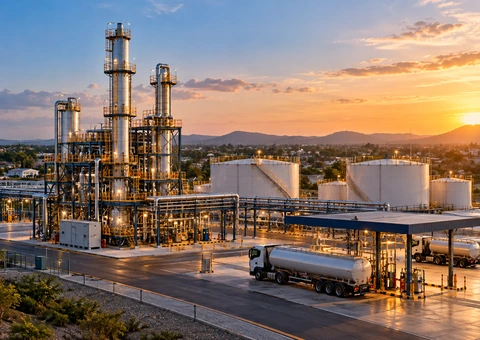
Current shortages of diesel and other refined products have renewed interest in smaller, faster-to-deploy refining solutions.
Why the subject is returning
The 2026 energy shock has exposed a major weakness in the global oil system: crude oil can be available while refined products remain scarce. Industry executives have warned of a multi-million-barrel-per-day shortage of refined products, while existing refineries in several markets are operating at very high utilization. This has strengthened the case for additional local processing capacity in countries that produce crude oil but import gasoline, diesel or other products.
Where a small refinery can make sense
A small or modular refinery can be attractive where there is secure crude feedstock, a defined local products market, expensive imports and limited logistics infrastructure. Modular construction can shorten site work and allow capacity to be developed in phases. However, a simple topping unit is not automatically a complete solution: meeting modern gasoline, diesel and sulfur specifications may require hydrotreating, reforming, sulfur recovery and other upgrading units.
Feasibility must come before construction
The correct refinery configuration depends on crude assay, required product slate, local specifications, utility availability, storage, transport, environmental requirements, CAPEX, OPEX and expected refining margins. Small refineries also face weaker economies of scale, so the commercial case must be tested carefully. Sometimes, upgrading an existing refinery or building selected processing units may be more economic than constructing an entirely new facility.
Experts Group perspective
Experts Group can develop the feasibility study, market analysis, crude and product assessment, preliminary configuration, project cost estimate and implementation strategy. We can then support Project Development & Management, EPC Contracting, equipment procurement, commissioning, Operation & Maintenance, Consultancy Services, Training & Capacity Building and financing arrangements. The objective should be a refinery-sized and configured for the local market, not simply a smaller version of a large complex refinery.
Sources: Reuters, October 2026, on refined-product shortages and constrained refining capacity; EIA refinery capacity and utilization data.