





Experts Group is a multidisciplinary group of companies providing integrated solutions, services, technologies, and project support across energy, oil and gas, refining and petrochemicals, information and communication technology, artificial intelligence, cybersecurity, and software development.
Through its affiliated companies and network of international and local partners, Experts Group combines technical expertise, project development capabilities, management experience, specialized technologies, and commercial resources to serve public- and private-sector clients.
Our business model enables us to assemble the appropriate combination of expertise, technologies, contractors, manufacturers, suppliers, and partners according to the specific requirements of each project, including its technical scope, location, contractual structure, financing requirements, schedule, and budget. This approach allows Experts Group to participate effectively in projects of different sizes and complexity.

Towards Prosperous & Sustainable World

Developing projects from concept to execution through feasibility assessment, planning, coordination, scheduling, cost control, risk management, and overall project supervision.
Providing integrated Engineering, Procurement and Construction services to deliver projects efficiently, safely, and in accordance with agreed technical, quality, cost, and schedule requirements.

Supporting the reliable and efficient operation of facilities and systems through planned operation, preventive and corrective maintenance, performance monitoring, and technical support.

Providing independent technical, commercial, and strategic advice to support project planning, technology selection, decision-making, performance improvement, and problem solving.

Sourcing and supplying equipment, systems, materials, technologies, and spare parts from qualified manufacturers and suppliers to meet project and operational requirements.
Delivering professional training, technical workshops, and tailored capacity-building programmes to develop skills, strengthen organisational capabilities, and support knowledge transfer.
Experts Group is interested in the development, evaluation, and implementation of energy projects across both conventional and renewable technologies. This includes power generation, transmission and distribution, solar energy, wind energy, hybrid systems, energy efficiency, and emerging clean-energy solutions. Our interest extends from early project assessment and technology selection to project development, implementation, operation, and performance improvement, with particular attention to reliability, economic viability, sustainability, and long-term energy security.

Our interests in oil and gas cover technologies and solutions related to upstream, midstream, and downstream activities. This includes production systems, processing facilities, pipelines, associated gas treatment, compression, storage, monitoring, automation, and supporting infrastructure. Experts Group focuses on practical technologies that improve operational efficiency, safety, reliability, environmental performance, and asset utilisation, while supporting the development and modernisation of oil and gas projects.

Experts Group is interested in refining and petrochemical projects that enhance the value obtained from crude oil, natural gas, and hydrocarbon feedstocks. Areas of interest include refinery development and upgrading, process units, product quality improvement, petrochemical production, utilities, storage, and supporting infrastructure. We also focus on modern technologies that improve efficiency, increase product value, reduce losses, strengthen operational performance, and support the development of integrated refining and petrochemical industries.

Our ICT interests cover modern digital infrastructure and communication technologies that support business, industry, government, and project operations. This includes computer and communication networks, data centers, cloud solutions, telecommunications, digital systems, system integration, monitoring platforms, and secure information exchange. Experts Group is interested in reliable, scalable, and integrated ICT solutions that improve connectivity, operational control, data management, and organizational efficiency.

Experts Group is interested in the practical application of artificial intelligence and cybersecurity across industrial, commercial, governmental, and digital environments. Areas include intelligent data analysis, automation, predictive systems, decision-support tools, machine learning, secure communications, cyber risk management, network protection, data security, and threat detection. Our focus is on solutions that strengthen operational intelligence, improve decision-making, protect critical information, and enhance the resilience of digital systems.

Our interests include the development of secure, reliable, and user-focused software solutions for desktop, web, cloud, and mobile platforms. This covers business applications, specialized technical software, database systems, online platforms, mobile applications, system integration, and customized digital tools. Experts Group aims to develop practical solutions that respond to specific operational and commercial requirements while maintaining strong standards of usability, scalability, performance, and security.

Experts for Modern Software and Communication Systems is a technology company affiliated with Experts Group, specializing in software, communications, digital systems, and information technology solutions. The company was established to support the development and supply of modern software and communication technologies for commercial, institutional, industrial, and governmental applications. Its areas of activity naturally complement the Group's broader interests in Information and Communication Technology, Artificial Intelligence and Cybersecurity, and Software and Mobile App Development. Through its association with Experts Group, the company can participate in projects involving software applications, computer and communication networks, data communication systems, digital platforms, system integration, information security, and related technology solutions. The Group's ICT activities also include artificial intelligence, cybersecurity, cloud computing, e-governance, Internet of Things, system design and implementation, training, and after-sales support. The company can support projects at different stages, from requirements definition and technical assessment through development, supply, integration, deployment, testing, training, and continuing technical support. Working within the Experts Group structure also enables it to cooperate with other affiliated companies and qualified international and local partners when projects require multidisciplinary capabilities. Its role within the Group is particularly important in projects where software, communications, connectivity, control, data management, and digital transformation form an essential part of the overall solution. For further information and updates, please contact us by email at [email protected].

Experts for Medical & Engineering Services Ltd. Co. (MES Experts) is an affiliated company within Experts Group that supports projects requiring specialized engineering services, technical equipment, systems integration, consultancy, supply, and professional support. The company provides a platform through which Experts Group can address projects in specialized technical and medical-sector applications where engineering, technology, equipment selection, procurement, implementation, and operational support must be combined within an integrated solution. The Group profile identifies medical-sector interests including patient-monitoring systems, hospital-management information systems, medical devices and instrumentation, together with consultancy, feasibility assessment, tender preparation, project management, and technology evaluation. Within this framework, the company can support clients in evaluating technical requirements, selecting appropriate technologies and equipment, coordinating suppliers, managing procurement, supporting installation and commissioning, and providing training and after-sales technical assistance. Its engineering capabilities also allow it to participate in multidisciplinary projects where medical, electrical, electronic, ICT, control, or communication systems need to be integrated into a single operational environment. As part of Experts Group, the company benefits from the Group's broader experience in project development, project management, consultancy, procurement, technology selection, and international partnerships. This enables it to approach assignments not simply as equipment supply, but as complete technical solutions tailored to operational requirements. For further information and updates, please contact us by email at [email protected].

Experts for Integrated Solutions Ltd. Co. is a technology and professional services company operating within Experts Group. The company focuses on providing secure, intelligent, and scalable solutions that combine software development, digital technologies, communication systems, artificial intelligence, cybersecurity, consultancy, training, and project support. Its activities are centered on helping organizations adopt and implement modern technologies that improve efficiency, security, communication, data management, and operational performance. The company supports clients through the development of customized software, websites and mobile applications, computer and communication networks, artificial intelligence solutions, cybersecurity technologies, and specialized digital systems. In addition to technology development, the company provides consultancy, project planning and management, professional training, and technical support, allowing it to participate in projects from initial concept and requirements definition through implementation, deployment, operation, and continuing development. Experts for Integrated Solutions has also developed a number of specialized software and security products, reflecting the Group's broader experience in mobile applications, information-security software, engineering applications, and digital platforms. The Experts Group profile documents extensive ICT experience, including websites, mobile applications, content management systems, management and financing systems, specialized engineering software, information-security applications, and e-learning platforms. As part of Experts Group, the company benefits from access to multidisciplinary expertise, international and local partners, and project experience across energy, engineering, ICT, and emerging technologies. Visitors interested in detailed information about its services, products, technologies, and projects can continue to the company's dedicated website (www.issexperts.co.uk).

International Experts for Engineering Contracting is the Iraq-based engineering and contracting arm of Experts Group, established to support the implementation and execution of projects within Iraq and the wider regional market. The company provides a local contracting platform through which Experts Group can undertake and support engineering, procurement, construction, installation, commissioning, operation, maintenance, and associated project-management activities. Its role is particularly relevant to energy, oil and gas, refining, petrochemical, infrastructure, industrial, and technology projects requiring local execution capability combined with international technical expertise and specialized suppliers. Experts Group's business model allows an affiliated company to be nominated as the project contractor according to the project's type, location, technical specialization, financing requirements, and contractual structure. International Experts for Engineering Contracting therefore plays an important role when Iraq-based projects require a locally established contracting company supported by the wider Group and its international and local partners. The Group's documented experience includes power plants, transmission and distribution systems, fuel processing, refineries, oil and gas transportation and storage, solar energy, hydropower, waste-to-energy, and energy-storage projects. EG Profile (V25-06) Through this broader network, the company can contribute to projects from development and tendering through procurement, construction, commissioning, operation, and maintenance, while coordinating specialist subcontractors, manufacturers, suppliers, and technical partners as required.



In an era where data security and privacy are essential, StegoTime provides an innovative solution for secure communication and information protection. By combining advanced encryption with sophisticated steganographic techniques, StegoTime enables sensitive messages, files, and critical business information to be securely concealed within ordinary digital media, such as images and audio files. Unlike conventional encryption, which may reveal the presence of protected information, StegoTime adds an additional layer of privacy by concealing the existence of the information itself. This makes it a valuable solution for governments, financial institutions, businesses, professionals, and individuals requiring a high level of confidentiality. Whether used for secure file transfers, confidential business communications, or personal data protection, StegoTime delivers a practical and user-friendly approach to safeguarding sensitive information. StegoTime—because privacy is not an option; it is a necessity. For further information and downloads, visit www.stegotime.com.

BlindCell is a secure, end-to-end encrypted messaging application for Android, designed to protect SMS communications using AES-256 encryption. It helps ensure that encrypted messages remain private and accessible only to their intended recipients. Designed as a complete replacement for the default SMS application, BlindCell enables users to exchange encrypted messages with individual recipients or groups. It generates a recipient-specific encryption key for each secure communication while retaining the option to send standard, unencrypted SMS messages whenever required. BlindCell automatically identifies incoming encrypted messages, decrypts them securely, and displays them through a simple and familiar messaging interface. Users can also transfer their BlindCell account to another compatible device while retaining the same mobile number and SIM card. By combining strong encryption with the convenience of conventional SMS messaging, BlindCell provides a practical and user-friendly solution for protecting private communications. For further information visit us at: https://www.blind-cell.com.

BlindCell Gear is a versatile text-encryption application for iOS and Android, designed to protect sensitive information across different communication channels. Using AES-256 encryption, it enables users to encrypt text before sharing it, helping ensure that protected content can be accessed only by its intended recipients. With BlindCell Gear, users can create and exchange encrypted messages through SMS, email, and compatible messaging or social media applications such as WhatsApp, Viber, and Messenger. It can also be used to securely store encrypted text on the device, providing additional protection for confidential notes, personal information, and important business content. By generating recipient-specific encryption keys, BlindCell Gear adds an independent security layer to everyday digital communications. Its practical and user-friendly design makes strong text encryption accessible to businesses, professionals, and individuals who require greater privacy and control over their information. For further information, visit www.blind-cell.com.

REICAL is a renewable energy-investment analysis and strategic planning software solution developed by Experts for Integrated Solutions Ltd. It enables users to evaluate the technical performance, financial viability, and economic feasibility of renewable energy projects of different technologies and generation capacities. REICAL supports the analysis of a broad range of renewable energy systems, including solar, wind, hydropower, biomass, biofuel, tidal, geothermal, kinetic, osmotic, waste-to-energy, and hydrogen energy. It can also assess conventional power-generation projects using fossil fuels such as oil and natural gas, allowing users to compare different technologies and investment scenarios through a consistent analytical framework. The software brings together the principal technical, financial, and administrative factors that determine project viability. Users can assess generation capacity, project cost, energy yield, system efficiency and degradation, operating and maintenance costs, energy tariffs, equity, debt financing, interest rates, loan duration, insurance, administration, depreciation, and inflation. Based on these inputs, REICAL calculates essential technical and financial outputs, including projected energy production, revenue, operating costs, loan repayments, net revenue, and total project performance. It also provides widely recognised investment indicators such as Net Present Value (NPV), Internal Rate of Return (IRR), Return on Investment (ROI), Profitability Index (PI), and Payback Period. Results are presented through clear tables and graphs, including annual project performance and loan-amortisation schedules. Input data, calculated outputs, and analytical results can also be printed or saved in PDF format for reporting, evaluation, and decision-making. REICAL is designed for investors, public and private companies, consultants, government and local authorities, renewable-energy developers, decision-makers, universities, researchers, training centres, and individuals seeking to make informed energy-investment decisions. Whether used to evaluate a proposed project, compare alternative technologies, explore different financing structures, or support research and professional training, REICAL transforms complex energy-investment data into clear and practical decision-making information. REICAL—turning energy opportunities into informed investment decisions. For further information, visit www.reical.uk.

The current Gulf disruption is shifting attention from simple production growth toward resilient infrastructure and secure product supply. A market shaped by disruption Oil and gas markets in 2026 are being driven as much by logistics, refining capacity and geopolitical risk as by crude production itself. By early October, Gulf oil flows recovered substantially from their wartime lows, but total regional exports remained below pre-war levels and refined-product exports recovered more slowly than crude. Brent crude was trading around $100 per barrel, reflecting continuing risk around shipping and infrastructure. The investment priority is resilience For producers and governments, the strategic focus is increasingly on resilient production and processing systems: associated-gas capture and treatment, crude and gas separation, compression, pipelines, storage, alternate export routes, digital monitoring, predictive maintenance, cybersecurity and energy-efficient processing. Projects that reduce flaring, improve recovery, lower operating costs or protect continuity of supply can remain valuable even in a volatile price environment. Technology must be matched to local conditions Oil and gas investments should be based on reservoir and feedstock characteristics, infrastructure availability, market demand, product specifications, environmental obligations and realistic operating capabilities. Technology selection should therefore follow technical and commercial analysis rather than adopting a standard solution for every field or facility. Experts Group perspective Experts Group can support oil and gas clients through Project Development & Management, feasibility and market studies, technology evaluation, EPC Contracting, Trading, Supply & Procurement, Operation & Maintenance, Consultancy Services and Training & Capacity Building. Particular value can be created by integrating engineering, commercial analysis, procurement and project management into one coordinated development process. Sources: Reuters energy-market reporting, October 2026; EIA Short-Term Energy Outlook, October 2026.

Current shortages of diesel and other refined products have renewed interest in smaller, faster-to-deploy refining solutions. Why the subject is returning The 2026 energy shock has exposed a major weakness in the global oil system: crude oil can be available while refined products remain scarce. Industry executives have warned of a multi-million-barrel-per-day shortage of refined products, while existing refineries in several markets are operating at very high utilization. This has strengthened the case for additional local processing capacity in countries that produce crude oil but import gasoline, diesel or other products. Where a small refinery can make sense A small or modular refinery can be attractive where there is secure crude feedstock, a defined local products market, expensive imports and limited logistics infrastructure. Modular construction can shorten site work and allow capacity to be developed in phases. However, a simple topping unit is not automatically a complete solution: meeting modern gasoline, diesel and sulfur specifications may require hydrotreating, reforming, sulfur recovery and other upgrading units. Feasibility must come before construction The correct refinery configuration depends on crude assay, required product slate, local specifications, utility availability, storage, transport, environmental requirements, CAPEX, OPEX and expected refining margins. Small refineries also face weaker economies of scale, so the commercial case must be tested carefully. Sometimes, upgrading an existing refinery or building selected processing units may be more economic than constructing an entirely new facility. Experts Group perspective Experts Group can develop the feasibility study, market analysis, crude and product assessment, preliminary configuration, project cost estimate and implementation strategy. We can then support Project Development & Management, EPC Contracting, equipment procurement, commissioning, Operation & Maintenance, Consultancy Services, Training & Capacity Building and financing arrangements. The objective should be a refinery-sized and configured for the local market, not simply a smaller version of a large complex refinery. Sources: Reuters, October 2026, on refined-product shortages and constrained refining capacity; EIA refinery capacity and utilization data.

Italy is combining rapid solar growth, new storage mechanisms and major transmission investment with ambitious 2030 targets. Italy is a fast-growing renewable energy market. Italy’s renewable build-out accelerated strongly through 2025 and 2026. Terna reported 81.7 GW of renewable capacity at the end of 2025, including 43.7 GW of solar and 13.5 GW of wind. By July 2026, installed renewable capacity had reached about 87.7 GW, including 47.3 GW of solar and 14.0 GW of wind. Italy’s national pathway points toward 107 GW of solar and wind by 2030. Investment is extending beyond generation Terna’s 2025–2034 grid plan foresees more than €23 billion of transmission investment, while storage is becoming increasingly important. Around 12 GW was contracted through FER X mechanisms in 2025 and Terna reported an 11.1 GW ready-to-build renewable pipeline as of January 2026. Opportunities therefore include solar, agrivoltaics, wind, repowering, battery storage, hybrid projects and acquisition of permitted or ready-to-build developments. The challenge is project quality Italy has a very large connection-request pipeline, which means not every project will reach construction. Investors should focus on permitting quality, grid position, land control, local constraints, expected energy yield, route-to-market, construction cost and the credibility of the development schedule. Due diligence is particularly important when acquiring projects from third-party developers. How Experts Group can support investors Experts Group can assist investors with opportunity screening, feasibility studies, market analysis, technical and commercial due diligence, Project Development & Management, EPC Contracting strategies, procurement, Operation & Maintenance planning and financing support. We can also help compare acquisition opportunities and determine whether a project is genuinely ready to build, requires further development or should be rejected before significant capital is committed. Sources: Terna statistical data and 2025 Development Plan; Terna 2025 results and 2026 monthly updates; Italian PNIEC targets.
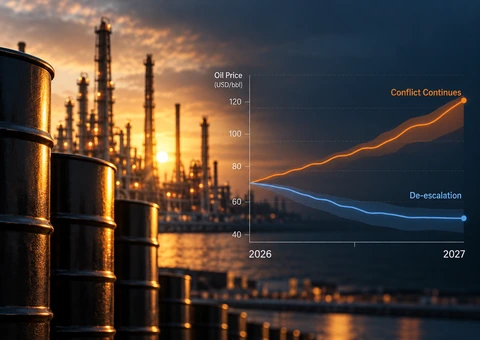
Brent crude settled near $100 per barrel on October 7, 2026. The latest U.S. Energy Information Administration outlook, completed before some of the most recent market events, forecasts Brent to average about $84 per barrel in 2027 as oil flows recover and inventories rebuild. That figure provides a useful de-escalation benchmark, but the current conflict creates unusually wide uncertainty. Conflict and recurring disruption If attacks on shipping and energy infrastructure continue, logistics remain constrained and refined-product shortages persist, Brent could remain broadly in the $95–115 per barrel range during much of 2027. The upper end would become more plausible if export infrastructure suffers renewed damage or the Strait of Hormuz is repeatedly disrupted. High refining margins and tight diesel supply could also keep the wider energy market under pressure. De-escalation and recovery If the Gulf conflict de-escalates, tanker traffic normalizes, damaged infrastructure is restored and inventories rebuild, Brent could gradually fall toward the $75–85 per barrel area by late 2027. This path is broadly consistent with the EIA’s current $84 annual-average forecast, although the decline may be uneven because rebuilding crude and refined-product stocks could take time. Business implication Investors should test projects against both price environments rather than relying on one forecast. Experts Group can incorporate scenario analysis into feasibility studies, project economics, sensitivity analysis, financing models and investment decisions for oil, gas, refining and energy projects. Brent prices are likely to remain highly sensitive to security in the Strait of Hormuz, refinery recovery and the rebuilding of global inventories. Note: The two scenario paths are illustrative midpoints designed for project sensitivity analysis. They are not trading advice or guaranteed forecasts. Sources: EIA Short-Term Energy Outlook, October 6, 2026; Reuters oil-market reporting, October 5–7, 2026; World Bank Commodity Markets Outlook, April 2026. Scenario lines are illustrative Experts Group analysis, not a guaranteed forecast.

The UK Clean Power 2030 Action Plan points to a major build-out of renewable and flexible capacity. By 2030, the government’s capacity ranges include 43–50 GW of offshore wind, 27–29 GW of onshore wind, 45–47 GW of solar and 23–27 GW of battery capacity. The plan estimates that clean power could require roughly £40–50 billion of investment per year between 2025 and 2030, including generation and transmission infrastructure. Where opportunities are emerging Opportunities include utility-scale and distributed solar, onshore and offshore wind, battery energy storage, long-duration storage, grid-support projects, repowering, co-located renewable-plus-storage projects and acquisition of development-stage or ready-to-build assets. The Contracts for Difference program continues to provide long-term revenue support, while connection reform is prioritizing projects that are deliverable and aligned with system needs. What investors must assess The market is attractive, but project selection is critical. Investors must consider land rights, planning status, grid connection, curtailment risk, technology choice, construction cost, offtake strategy, financing, merchant exposure and operating performance. A project that appears attractive on headline capacity may be weak if its grid or planning position is uncertain. How Experts Group can support investors Experts Group can help investors identify and screen opportunities, conduct feasibility studies and market analysis, review technical and financial assumptions, undertake Project Development & Management, support acquisition due diligence, prepare EPC Contracting strategies, arrange Trading, Supply & Procurement, develop Operation & Maintenance plans, provide Consultancy Services and support financing discussions. This enables investors to move from opportunity identification to ownership and execution with a structured technical and commercial process. Rapid capacity expansion, grid reform and long-term support mechanisms are creating a large pipeline of investable projects. Sources: UK Department for Energy Security and Net Zero, Clean Power 2030 Action Plan; NESO connection reform updates, 2025–2026; UK CfD Allocation Round 7 results, 2026.